Play Rolit Board Game
Reversi for a crowd - four colours, one board, most discs of your colour wins.How to Play Rolit
In a nutshell: Reversi for a crowd - four colours, one board, most discs of your colour wins. You play on an 8 × 8 board (64 squares), it's rated party chaos, and it's up to four colours at once - most discs of your colour wins.
Rolit takes the flank-and-flip heart of Reversi and opens it up to as many as four players, each with their own colour of ball. Played on the familiar 8x8 board, it uses the same capturing rule - trap a line of other players' balls between two of your own and flip them all to your colour - but with three opponents in the mix, the board becomes a gloriously chaotic free-for-all. Alliances form and shatter move by move, a colour that looks dominant can be swamped in a single turn, and the whole thing races to a frantic finish. On this site you take one colour and the computer plays the empty seats, so you can enjoy the multiplayer mayhem solo. When the board fills, whoever has the most balls of their own colour wins - simple to grasp, hilarious to play, and a completely different beast from the measured two-player duel.
Rolit at a glance
| Goal | Finish with more balls of your colour than any other player. With up to four colours sharing 64 squares, even a quarter of the board can be enough to win. |
|---|---|
| Board | 8 × 8 - 64 squares |
| Players | 1 to 4 players - empty seats are filled by the computer |
| Difficulty | Party chaos |
| How it plays | Up to four colours at once - most discs of your colour wins |
| Computer levels | Easy, Medium, Hard |
| Category | Rule Twists |
Step by step

Goal
Finish with more balls of your colour than any other player. With up to four colours sharing 64 squares, even a quarter of the board can be enough to win.
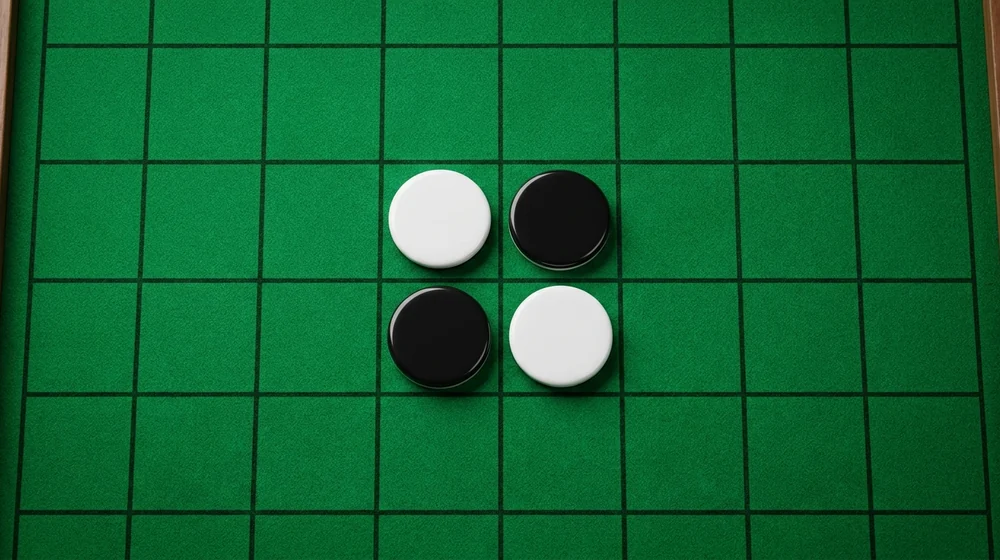
Four colours
Each player owns one colour. You play your colour; the computer plays the others. Turns rotate through the colours in order.

Placing a ball
Place a ball next to any ball already on the board. If a capturing move is available - one that traps a straight line of other players' balls between two of your own - you must make one, and the trapped balls flip to your colour. Only if you cannot capture do you simply place a ball adjacent to any existing one.

Flipping any colour
Unlike two-player Reversi, a flip can capture balls of several different colours at once - anything that is not yours, caught between two of yours, becomes yours.
Winning
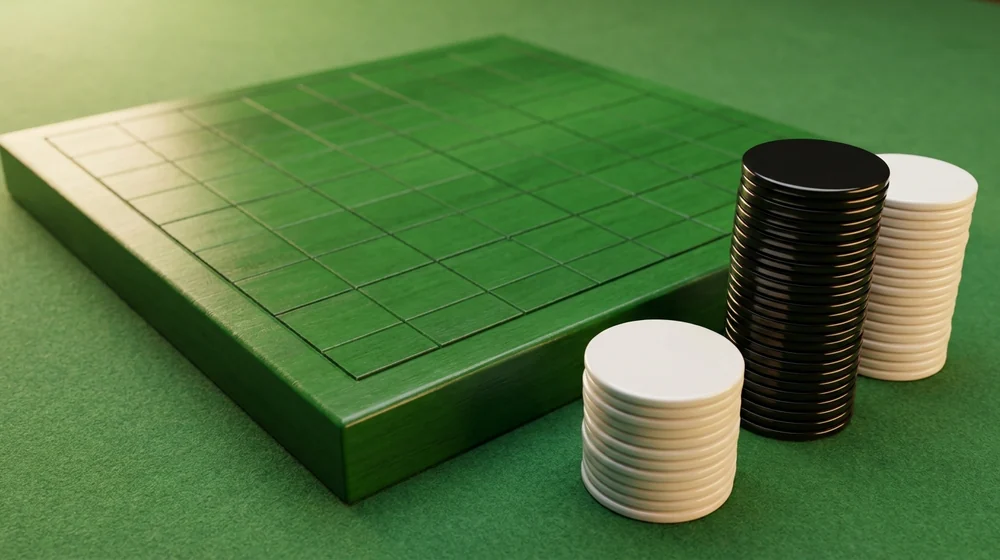
Play until the board is full or no one can move, then count each colour. The player with the most balls of their own colour wins the game.
History of Rolit
Rolit is a modern four-player reworking of Reversi, produced by the Dutch games company Goliath and sold widely across Europe. It keeps the classic flanking-and-flipping capture but rebuilds the game around brightly coloured balls and a frame that holds them on an 8x8 grid, aimed squarely at family and party play.
By expanding Reversi from two colours to four, Rolit changes the social dynamics entirely. With three opponents rather than one, informal alliances, betrayals and gang-ups emerge naturally, and the disc-count swings that make Reversi exciting become even more frequent and dramatic.
Rolit has won recognition as an accessible, replayable family game, and it stands as the best-known multiplayer descendant of Reversi - proof that a rule as simple as "flank and flip" can be stretched from a cerebral two-player classic into a raucous game for the whole table.
How to Win Rolit: Strategy
💡 Top tip: Watch all three opponents, not just one - a move that looks great against the leader can set up a different colour to swamp you next turn.
Winning tips, in order of importance
- Corners are still golden: a ball in a corner can never be flipped, so it is a permanent point for your colour no matter how wild the board gets.
- Time your big captures for late in the game, when there are fewer turns left for opponents to flip your gains back.
- Don't peak too early - a colour that dominates mid-game paints a target on itself and often gets ganged up on by the flow of play.
- Look for moves that flip several opponents at once; converting a mixed line is the most efficient way to swing the count in a four-colour game.
- Stay flexible near the edges and corners, since that is where stable, unflippable balls accumulate and games are ultimately decided.
- Keep an eye on turn order - knowing who plays right after you helps you avoid leaving a juicy line for the next colour to exploit.
Advanced tactics for Rolit
- Model the board as a shifting three-front war: evaluate each candidate move by how it affects all opponents, since helping yourself against one colour can gift another the lead.
- Bank stability in corners and anchored edges early - in a four-way scramble, unflippable balls are the only points you can truly count on keeping.
- Hold your biggest multi-colour captures until the closing moves, when opponents have too few turns left to reclaim what you flip.
- Manage your threat profile: leading too visibly invites the other three colours' moves to erode you, so sometimes it pays to stay a quiet second until late.
- Read the turn order like a clock - the colour immediately after you is the one most able to punish a loose line, so avoid setting up captures for them.
- Prefer moves that convert mixed runs of several colours at once; efficiency of capture matters more when three rivals are all growing at the same time.
- In the endgame, count not just your own balls but the gap to the current leader, and steer captures specifically at whichever colour is ahead.
Common Rolit mistakes to avoid
- Focusing on a single opponent - a move that beats the leader can hand a different colour the lead, so weigh all three rivals.
- Peaking too early - a colour that dominates mid-game becomes everyone's target, so avoid an obvious lead until the closing moves.
- Cashing big captures too soon - flips made early get reclaimed, so save your largest multi-colour captures for the final turns.
- Neglecting corners - even in the four-colour chaos, an unflippable corner ball is a guaranteed point you can count on keeping.
Rolit Variations
Two-player Rolit
Played with just two colours, Rolit plays much like standard Reversi with the adjacency placement rule, a gentler introduction to the game.
Three-player Rolit
The odd-numbered game creates constantly shifting two-against-one dynamics and is many players' favourite count of all.
Classic Reversi / Othello
The two-player ancestors, where the same capture rule produces a deep, calculated duel rather than a party free-for-all.
Team Rolit
House rules where four players pair into two teams add a cooperative layer on top of the four-colour chaos.
Anti-Rolit
A misere-style twist where the fewest balls of your colour wins, inverting the scramble for capture.
Rolit FAQ
How many players can play Rolit?
Rolit is designed for two, three or four players, each using a different colour. On this site you play one colour and the computer controls the remaining seats, so you can enjoy the full four-colour game on your own.
How is Rolit different from Reversi?
Rolit uses the same flank-and-flip capture, but it supports up to four colours instead of two, and balls are placed next to existing balls. As in Othello you must capture when you can; the twist is that if you cannot capture you do not pass - you simply place a ball adjacent to any existing one. With more colours on the board, a single move can flip several players' pieces at once, making the game faster and more chaotic.
Do I flip only one opponent's pieces?
No. In a multi-colour game, any run of balls that are not your colour, trapped in a straight line between two of your balls, flips to you - even if that run contains a mix of the other players' colours.
How do you win Rolit?
When the board is full or no legal moves remain, each colour's balls are counted. The player with the most balls of their own colour wins. You do not need a majority of the whole board - just more than any single rival.
Is Rolit a good party game?
Very. Its up-to-four-player format, quick swings and shifting alliances make it lively and social, closer in spirit to a boisterous board-game night than the quiet, calculated two-player Othello duel.
Why is Rolit not available in online multiplayer here?
The head-to-head online mode is built for two-player games with a shared board and alternating turns. Rolit's four-colour, up-to-four-player format needs a different setup, so for now you play it against the computer rather than against other people online.
Rolit guides & strategy
- What is Rolit, the four-player Reversi?
- Reversi vs Othello: what is the difference?
- Browse the full Reversi FAQ
Still have a question about Rolit? Browse the full Reversi FAQ, look up a term like flank or mobility in the Reversi glossary, or compare Rolit with the other variants in the rules for every Reversi game.
Last updated .